
Ten Years of Waterbird Counts in Western Port, Victoria, 1973-83. I. Waterfowl and Large Wading Birds
Richard H Loyn, Peter Dann, Pat Bingham
P. 333-365
Abstract
Waterbirds have been counted five times a year at 18 sites in Western Port Bay from spring 1973 by the Bird Observers Club of Australia. This paper deals with numbers of waterfowl and large wading birds in the first ten years to 1983. The period began with two unusually wet years and ended with a series of dry years and drought. Waterbirds tended to be scarce when inland water was plentiful, and numerous as inland waters dried after such wet periods; this was reflected in various correlations with rainfall indices. Inland-breeding birds were influenced mainly by those factors whereas locally breeding birds showed more consistent seasonal patterns, often with minimum numbers in winter and spring when they were breeding in nearby swamps outside the survey area. Numbers of some locally breeding birds responded positively to rainfall in the previous year. The Bay was used as a minor drought refuge by some inland-breeding bird species. Its potential value may have been reduced as peripheral freshwater swamps dried.
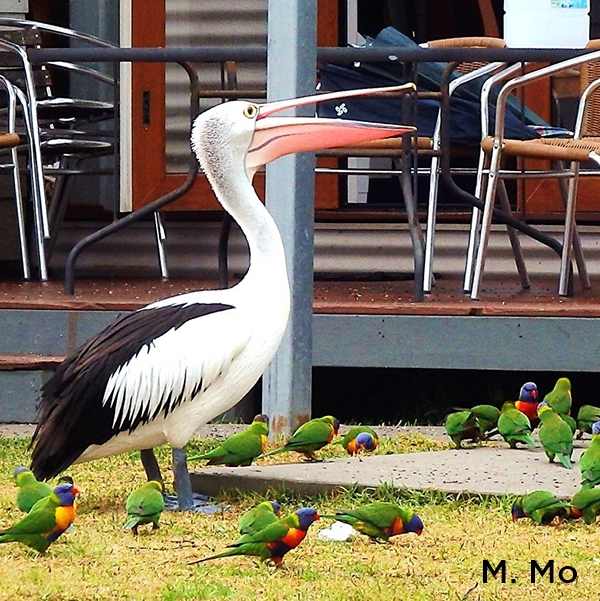
Birds that declined during the study were all species that fed mainly from intertidal mudflats (White-faced Heron Ardea novaehollandiae, Great Egret A. alba, Black Swan Cygnus atratus, Grey Teal Anas gracilis and Chestnut Teal A. castanea) or caught fish in tidal waters (Australian Pelican Pelecanus conspicillatus and four species of cormorant). This may have been related to a major decline in seagrass. Birds that increased were all species that fed extensively from peripheral saltmarsh, fresh water or pasture (Cattle Egret Ardea ibis, Australian White Ibis Threskiomis molucca, Straw-necked Ibis T. spinicollis, Yellow-billed Spoonbill Platalea flavipes, Australian Shelduck Tadoma tadornoides, Pacific Black Duck Anas superciliosa and Eurasian Coot Fulica atra).
Numbers of all species differed consistently between sites. Some of these patterns of distribution varied with season or year, but in general they remained consistent over time. Most conclusions made in the first year about local distribution and seasonal patterns were confirmed subsequently.