
Nesting and Foraging by a Pair of Striped Honeyeaters at Baradine, New South Wales
K A Wood, Andrew J Ley
P. 88-103
Abstract
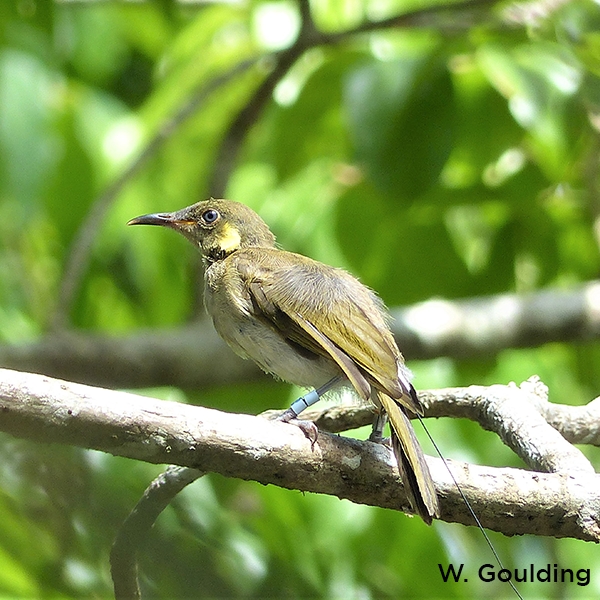
A breeding pair of Striped Honeyeaters Plectorhyncha lanceolata was observed at three nests at Baradine, northern New South Wales, for 43.3, 25 .8 and 42.5 hours overall in the nest-building, incubation and nestling phases respectively during spring 2003. The breeding home-range around one nest (nest 2) was 4.2 ha, dominated by mature White Cypress Pines Callitris glaucophylla. Both parents defended a small area within a radius of about 20m from the nest and were engaged almost equally in nest-building, incubation and feeding a single nestling. The mean rate at which both parents fed the nestling was 11.3 (range 4.3-16.7) visits/hour. The female's brooding effort was three times greater than that of the male, but the male uttered most (88%) solo songs and performed most (if not all) territorial song-flights. Overall, there were at least twice the number of calls and displays during nest-building as during incubation or while feeding the young. Food, foraging, and use of feet, as well as flight and comfort behaviour, are also described.