
Breeding Behaviour and Morphology of the Regent Honeyeater Xanthomyza phrygia
Andrew J Ley, M B Williams
P. 366-376
Abstract
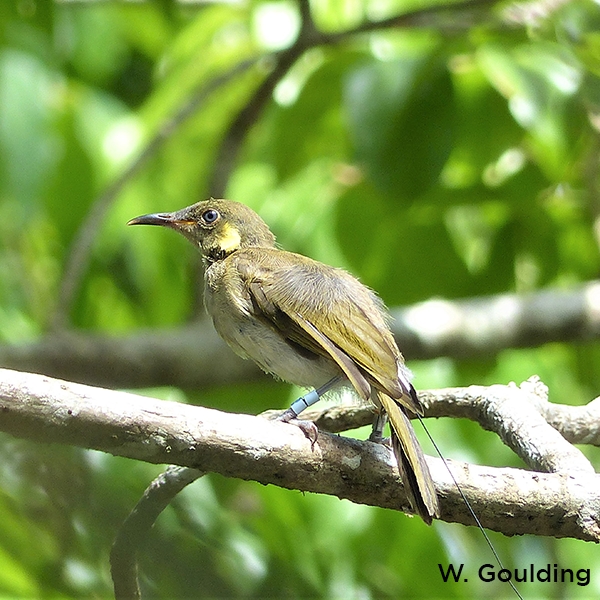
Detailed field observations show that the Regent Honeyeater Xanthomyza phrygia is more sexually dimorphic than has been appreciated. Within a pair, the male is larger than the female and has brighter plumage. The development of adult plumage is described from observation of juveniles in the weeks following fledging.
Observations of Regent Honeyeaters at five sites in the Bundarra-Kingstown district west of Armidale in northern New South Wales, during the period 1984-1992 inclusive, suggest a local population of at least 30 birds. Young fledged from four out of 20 nests.
Regent Honeyeaters nested as simple pairs, but when not breeding congregated in loose flocks, when their noisy garrulous behaviour contrasted with their relative quietness during breeding. We describe several calls from both stages of the life cycle.
Nest-building, incubation and the nestling period occupied about seven, fifteen and fifteen days respectively. The female alone built the nest and incubated although the male remained in close attendance during these stages. Both parents fed the nestlings and both fed the young for several weeks after fledging. Both parents took and ate faecal sacs from the young.