
Food Remains in Nests of Rainbow Bee-eaters Merops ornatus in Old-growth Woodland of South-western Australia
GRAHAM R FULTON, A B ROSE
p. 37-43
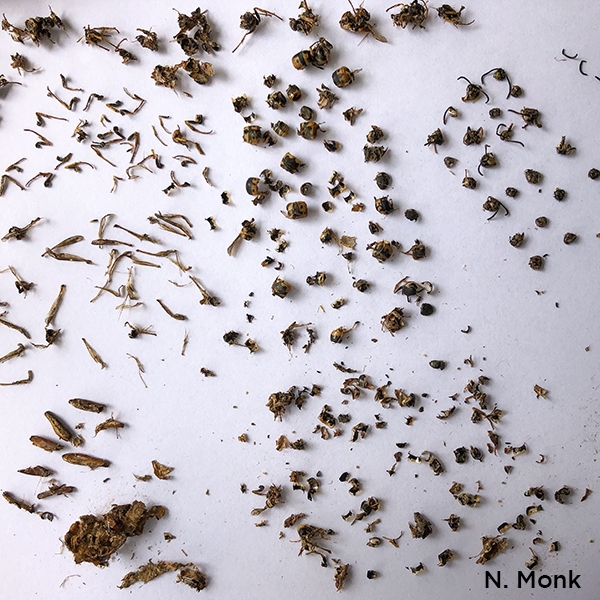
Abstract
Rainbow Bee-eaters Merops ornatus nest in burrows where they accumulate arthropod remains, in their nest-chambers, throughout the breeding season. We report on the food remains in seven nest-chambers, from Dryandra in south-western Australia. Dryandra encompasses 27 000 ha of old-growth woodland that has been identified with a greater richness and abundance of native arthropods than the surrounding agricultural region in which it is located. Honeybees Apis mellifera were the most frequent prey taken by Rainbow Bee-eaters, accounting for 94% (by number) of the total food remains found in their nests. The proportions of prey taken were found to vary significantly between some nests, although there was no consistent pattern between and within sites. The dominance of Honeybees in the food remains indicates both that the bees are present in this large reserve and that they are the preferred prey of Rainbow Bee-eaters, at this site, during the Bee-eater’s breeding season.