
Breeding Territories and Breeding Success of the Jacky Winter Microeca fascinans in South-eastern Queensland
K A WOOD, NICCI THOMPSON, ANDREW J LEY
p. 121-131
Abstract
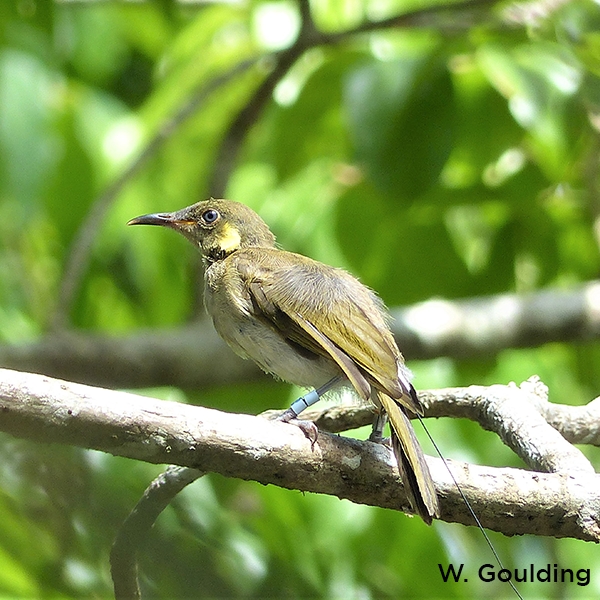
Breeding territories and breeding success of the Jacky Winter Microeca fascinans were investigated in the 2005–06 breeding season in 140 hectares of fragmented eucalyptwoodland in south-eastern Queensland. The breeding density was eight territories in 140 hectares (one pair per 17.5 ha) and the mean territory area of a breeding pair was 1.7 hectares (range 1–3.1 ha, n = 8). All territories comprised similar proportions of box woodland and open box woodland, characterised by patches of mature or sapling box trees, isolated live trees, dead trees (standing and fallen), logs and stumps. Of 23 nests, 21 (91%) were in forks consisting of a pair of dead branchlets near the extremity of a long live branch in eucalypt trees estimated to be >160 years old. The sample of nests is small, but the study suggests that woodland without aged eucalypt trees might not provide the species’ preferred nest-sites. Three nests failed before incubation was observed. Of the remaining 20 nests with eggs, five nests produced seven fledglings, resulting in a nesting success of 25%, an estimated breeding success of 17.5%, and productivity of 0.88 young per territory in 2005–06. The post-fledging dependence period for one juvenile was ~9 weeks.