
The Breeding Biology of the Dusky Honeyeater Myzomela obscura in the Northern Territory, and the Importance of Nectar in the Diet of Nestling Honeyeaters
RICHARD A NOSKE, ASHLEY J CARLSON
p. 97-113
Abstract
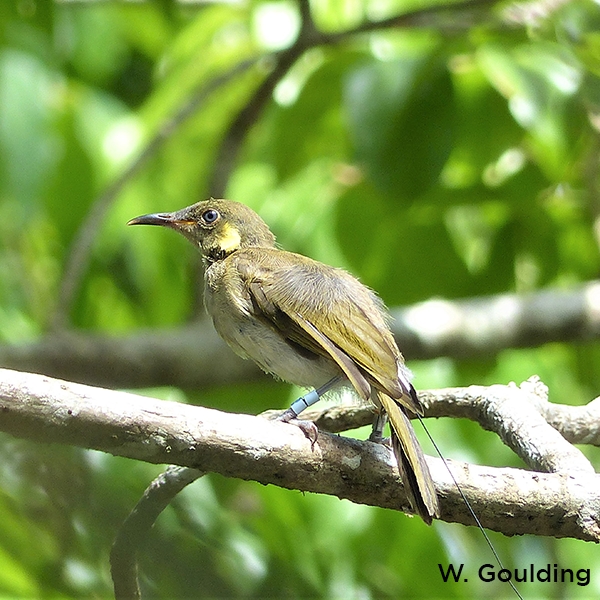
The breeding biology of the Dusky Honeyeater Myzomela obscura is poorly known, despite the species’ wide distribution and use of a broad range of habitats. In the Northern Territory, breeding was recorded in all months, but just over 50% of estimated laying dates were in April and May, corresponding with the transition from the wet to the dry season. In Darwin, nests were placed 1.0 to 9.0 m above the ground in a variety of trees or tall shrubs, including exotics. The size of clutches or broods never exceeded two (n = 9). At two closely observed nests, the incubation period was 12.4 and 12.75 days, similar to another myzomeline honeyeater. Nest-attentiveness was ~65% over 2 days at one nest, similar to the few temperate-zone Australian honeyeaters for which such data are available. The nestling period at the only successful nest that we observed was 14.3 ± 0.7 days, consistent with slightly smaller species in other honeyeater genera. Unlike most honeyeater species, nestling Dusky Honeyeaters hatched with much down. Diurnal brooding represented 20–28% of the presumed female’s time during the first 4 days after hatching, but had ceased by Day 6, earlier than in temperate-zone honeyeater species. The mean rate of food provisioning was very low (8.9 feeds/h) compared with that of most other honeyeater species studied to date. Evidence suggests that Dusky Honeyeaters may feed their young largely on nectar.