
Response of eight bird species to woodland rehabilitation at Green Wattle Creek in the Hunter Region of New South Wales
Mike Newman
pp. 194-207
Abstract
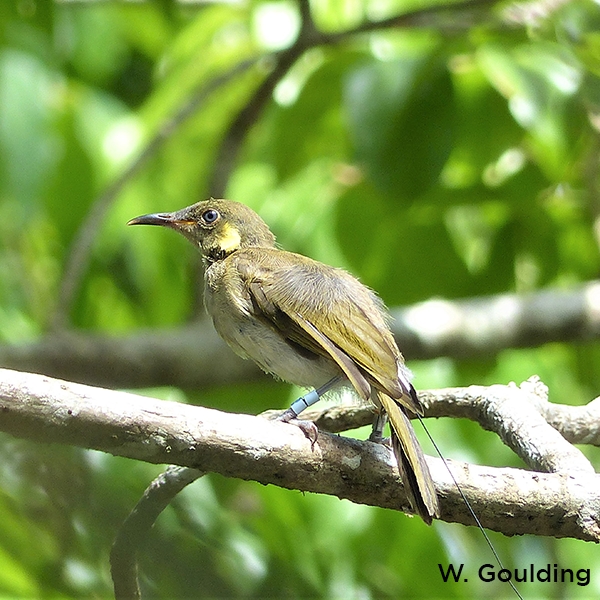
Habitat-management interventions may affect bird populations adversely unless conducted in an environmentally sensitive manner. This paper contrasts the occurrence of eight bird species in woodland modified by weed eradication and controlled burns at Green Wattle Creek in the Hunter Region of New South Wales. In combination, rehabilitation measures removed most of the extensive shrub-layer vegetation and initially increased the amount of bare ground, until a grass and herb layer developed. Three species arguably benefitted from the modification, at least temporarily. Speckled Warblers Chthonicola sagittata initially increased, taking advantage of improved ground-foraging conditions, but then declined as grass and herb cover increased. Eastern Yellow Robins Eopsaltria australis also appeared to benefit from more open habitat, which favoured the perch-and-pounce foraging strategy of this species. This advantage was sustained even after ground-cover increased. Although Fuscous Honeyeaters Lichenostomus fuscus predominantly feed in upper vegetation levels, they favour habitat lacking understorey. The rehabilitation activities increased the amount of habitat suitable for this species at Green Wattle Creek, potentially reversing their long-term decline, attributed to the removal of cattle. Although some statistically significant differences were established for the other five species—two honeyeaters, two whistlers and the Grey Fantail Rhipidura fuliginosa—these were not attributed primarily to changes in vegetation structure.