
Avian flight heights in the Brigalow Belt and Einasleigh Uplands, Queensland: Implications for wind energy development
Gus Daly, Elliot C. Leach
Abstract
A comprehensive dataset of bird flight heights, collected for baseline onshore wind farm bird utilisation surveys across three Queensland Interim Biogeographic Regionalisation for Australia (IBRA) bioregions, was compiled to identify avian
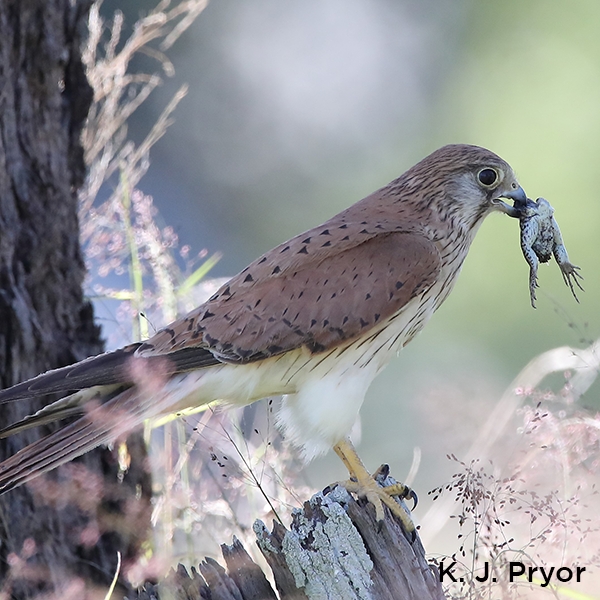
species or groups at elevated risk of collision with wind turbines. The dataset comprised over 3600 individual point-count surveys from eight survey areas, recording a total of 69,987 flight events from 143 species. A total of 5781 flight events occurred at heights within the theoretical Rotor-Swept Area (tRSA); birds that fly more regularly at these heights are inherently at increased risk of collision with wind turbines. Several guilds with increased collision risk were identified, including aerial insectivores (Apodidae, Meropidae, Artamidae), diurnal raptors (Accipitridae, Falconidae) and large waterbirds (Phalacrocoracidae, Threskiornithidae). The threatened and migratory White-throated Needletail Hirundapus caudacutus and migratory Pacific Swift Apus pacificus were among the species considered most at risk based on their flight data. Here we present the most comprehensive collation of diurnal bird flight height data currently available for Australia. These data provide a critical baseline for understanding potential bird interactions with wind energy infrastructure, informing both pre-construction risk assessment and broader conservation planning.
species or groups at elevated risk of collision with wind turbines. The dataset comprised over 3600 individual point-count surveys from eight survey areas, recording a total of 69,987 flight events from 143 species. A total of 5781 flight events occurred at heights within the theoretical Rotor-Swept Area (tRSA); birds that fly more regularly at these heights are inherently at increased risk of collision with wind turbines. Several guilds with increased collision risk were identified, including aerial insectivores (Apodidae, Meropidae, Artamidae), diurnal raptors (Accipitridae, Falconidae) and large waterbirds (Phalacrocoracidae, Threskiornithidae). The threatened and migratory White-throated Needletail Hirundapus caudacutus and migratory Pacific Swift Apus pacificus were among the species considered most at risk based on their flight data. Here we present the most comprehensive collation of diurnal bird flight height data currently available for Australia. These data provide a critical baseline for understanding potential bird interactions with wind energy infrastructure, informing both pre-construction risk assessment and broader conservation planning.