
Bird interactions with drones, from individuals to large colonies
Mitchell Lyons, Kate Brandis, Corey Callaghan, Justin McCann, Charlotte Mills, Sharon Ryall, Richard Kingsford
pp. 51-56
Abstract
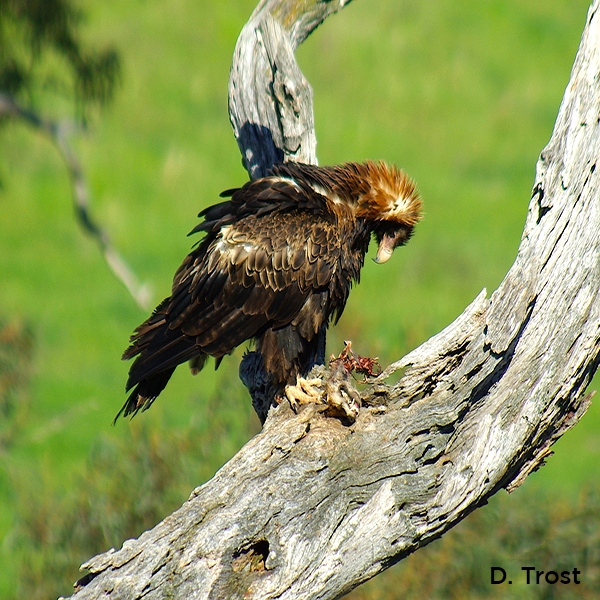
Drones are rapidly becoming a key part of the toolkit for a range of scientific disciplines, as well as a range of management and commercial applications. This presents challenges in the context of how drone use might impact on nearby wildlife, especially birds as they might share the airspace. This paper presents observations (from 97 flight hours) and offers preliminary guidance for drone-monitoring exercises and future research to develop guidelines for safe and effective monitoring with drones. Our study sites spanned a range of arid, semi-arid, dunefield, floodplain, wetland, woodland, forest, coastal heath and urban environments in south-eastern and central Australia. They included a nesting colony of >200 000 Straw-necked Ibis Threskiornis spinicollis, the largest drone-based bird-monitoring exercise to date. We particularly focused on behavioural changes towards drones during the breeding season, interactions with raptors, and effects on birds nesting in large colonies—three areas yet to be explored in published literature. Some aggressive behaviour was encountered from solitary breeding birds, but several large breeding bird colonies were surveyed without such issues. With multi-rotor drones, we observed no incidents that posed a threat to birds, but one raptor attacked and took down a fixed-wing drone. In addition to providing observations of interactions with specific bird species, we detail our procedures for flight planning, safe flying and avoidance of birds, and highlight the need for more research into bird– drone interactions, most notably with respect to territorial breeding birds, safety around large raptors, and the effects of drones on the behaviour of birds in large breeding colonies.
References
Abd-Elrahman, A., Pearlstine, L. & Percival, F. (2005). Development of pattern recognition algorithm for automatic bird detection from unmanned aerial vehicle imagery. Surveying and Land Information Science 65, 37.
Chabot, D. & Bird, D.M. (2012). Evaluation of an off-the-shelf unmanned aircraft system for surveying flocks of geese. Waterbirds 35, 170–174.
Chabot, D. & Francis, C.M. (2016). Computer-automated bird detection and counts in high resolution aerial images: A review. Journal of Field Ornithology 87, 343–359.
Chabot, D., Craik, S.R. & Bird, D.M. (2015). Population census of a large common tern colony with a small unmanned aircraft. PloS One 10, e0122588.
Descamps, S., Béchet, A., Descombes, X., Arnaud, A. & Zerubia, J. (2011). An automatic counter for aerial images of aggregations of large birds. Bird Study 58, 302–308.
Hodgson, J.C. & Koh, L.P. (2016). Best practice for minimising unmanned aerial vehicle disturbance to wildlife in biological field research. Current Biology 26, R404–R405.
Hodgson, J.C., Baylis, S.M., Mott, R., Herrod, A. & Clarke, R.H. (2016). Precision wildlife monitoring using unmanned aerial vehicles. Scientific Reports 6, 22574.
Kingsford, R. & Porter, J. (2009). Monitoring waterbird populations with aerial surveys–what have we learnt? Wildlife Research 36, 29–40.
Lambertucci, S.A., Shepard, E.L. & Wilson, R.P. (2015). Human-wildlife conflicts in a crowded airspace. Science 348, 502–504.
Rodríguez, A., Negro, J.J., Mulero, M., Rodríguez, C., Hernández-Pliego, J. & Bustamante, J. (2012). The eye in the sky: Combined use of unmanned aerial systems and GPS data loggers for ecological research and conservation of small birds. PLoS One 7, e50336.
Sardà-Palomera, F., Bota, G., Vinolo, C., Pallares, O., Sazatornil, V., Brotons, L., Gomariz, S. & Sarda, F. (2012). Fine-scale bird monitoring from light unmanned aircraft systems. Ibis 154, 177–183.
Trathan, P.N. (2004). Image analysis of color aerial photography to estimate penguin population size. Wildlife Society Bulletin 32, 332–343.
Vas, E., Lescroël, A., Duriez, O., Boguszewski, G. & Grémillet, D. (2015). Approaching birds with drones: First experiments and ethical guidelines. Biology Letters 11, 20140754.
Weissensteiner, M.H., Poelstra, J.W. & Wolf, J.B. (2015). Low-budget ready-to-fly unmanned aerial vehicles: An effective tool for evaluating the nesting status of canopy-breeding bird species. Journal of Avian Biology 46, 425–430.